
Support Cases (Client Interviews)
Real clients we've helped, in their own words. Costs, timelines, what went well and what didn't — all out in the open.
* Names are initials and some details are blurred for privacy. Amounts are from the time of each case and approximate (in pesos, with rough US$ equivalents). Rules and market prices can change, so please confirm the latest for your own situation.
Case 1. Getting an SRRV Smile (permanent residency visa)
Client: Male, 60s, self-employed (single)
- クライアント
- Male, 60s, self-employed (single)
- When
- 2016
- Deposit
- US$20,000 (at the time; held by the PRA, annual fee separate)
- Support fee
- about ¥120,000 (≈ US$800)
- Time to approval
- about 2 months (usually ~1 month)
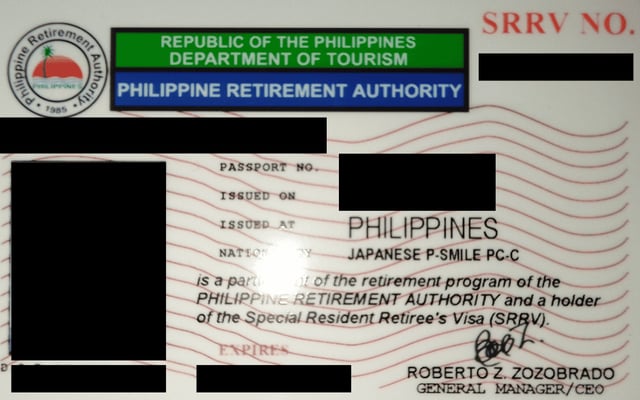
Q.What first made you think about moving to Manila?
A.I was self-employed and not tied to one place, so I thought, why not go abroad? The Philippines is close to Japan, just a one-hour time difference, warm all year, friendly to Japanese, and English works. The conditions all lined up.
Q.Of all the residency visas, why the SRRV Smile?
A.Mostly because it was cheaper than the others. And it's a “real” permanent residency — it doesn't expire like in some countries. Even if I'm back in Japan for long stretches, the residency stays valid. For someone who wants to go back and forth, nothing beats it.
Q.I heard you were torn between Manila and Cebu.
A.Right up to the end. But in the capital, Manila, there are more Japanese people and Japanese companies, so it felt safer if anything came up. Manila turned out to be the right call.
Q.Was anything hard about the process?
A.Honestly, almost nothing (laughs). Even the bank account — I opened one at Bank of Commerce with just my passport and a ₱1,000 deposit. With someone coming along, there was really nothing to trip over.
Q.What exactly did the support cover?
A.From preparing documents to going with me to the PRA (Philippine Retirement Authority) and interpreting, the deposit account, and even the medical check. The medical check was nothing like Japan's — just a short chat with the doctor, but all in English, so having someone along was essential. They even came to the office with me on the day I received the visa.
Q.Ten years on, how do you feel looking back?
A.I'm still living well in Manila. I'm really glad I got permanent residency early. Prices in the Philippines have crept up lately, but it's not something I worry about yet.
Founder's note
SRRV rules get revised, so I confirm the deposit amount, age conditions, and annual fee with the PRA every time. The big picture is the same in 2016 and today, but the figures and procedures can change. This client said it “wasn't hard even on my own” — but that's because someone was alongside, interpreting. Facing the English-speaking counters alone, it rarely goes this smoothly.
Case 2. Opening and running a hair salon in Manila
Client: Male, 20 years as a stylist, married (spouse visa)
- クライアント
- Male, 20 years as a stylist, married
- When
- 2021
- Structure
- Corporation in his Filipino wife's name + 13(a) visa
- Initial cost
- about ₱300,000 (≈ US$5,300)
- Prep time
- ~2 weeks to find a unit + 1–2 months of prep
- Now
- 2 chairs, 2–3 staff / income from a beauty school too
Q.Opening a salon in the Philippines is a big decision.
A.I'd been a stylist in Japan for about 20 years, but I was uneasy about where the industry was heading. I saw the energy here on a trip and thought, “Let's give it a go.”
Q.How did you handle residency and incorporation?
A.I married a Filipina, set up a corporation in her name, and got a 13(a) visa (permanent residency). That made the business fully legal. It also sorted out the foreign-ownership restrictions that trip a lot of people up.
Q.How much was the initial cost?
A.About ₱300,000 (≈ US$5,300) for everything — the unit's deposit, the interior, and the equipment. Compared with opening the same size of shop in Japan, it was far cheaper.
Q.Any trouble with permits or hiring?
A.The permits (DTI, Mayor's Permit, BIR and so on) went through more smoothly than I expected. Young staff are easy to find, too — the population here is young and interest in beauty keeps growing.
Q.How are things five years on?
A.It's a small shop, 2 chairs and 2–3 staff, but customers never stop coming. If I advertise, too many show up, so I actually hold back (laughs). People say “Japanese are good with their hands,” and on top of the salon I earn from a beauty school as well. The takings cover the shop's rent and running costs, staff wages, and a comfortable life for my family. Next I plan to bring in AI to run things more efficiently and grow.
Founder's note
The mix of a spouse visa, a local corporation, and a 13(a) visa changes case by case. This client had marriage as a starting point, so this shape worked; for someone single or here short-term, the design is different. The permits going “smoothly” was because we lined up the paperwork on the ground first. And I agree completely — the energy here is nothing like Japan's beauty industry.

Case 3. A condominium rental contract (Makati)
Client: Family of 4, looking in Makati
- クライアント
- Family of 4
- When
- 2021
- Area / budget
- Makati / ₱30,000–40,000 a month
- Rent
- ₱37,000/month (≈ US$660)
- Upfront
- 2 months' rent (deposit + advance), agent fee ~10%
- Viewing → contract
- 5 viewings, ~2 weeks to sign
Q.What were you looking for?
A.A family of four, in Makati, with a budget of ₱30,000–40,000 a month.
Q.What did you end up with?
A.A well-known new condominium in Makati, ₱37,000 a month (≈ US$660). Two months' rent up front for the deposit and advance, plus an agent fee of about 10%. We saw around five places and decided quickly, but it took about two weeks to sign.
Q.I heard there was trouble after you moved in.
A.That was rough… About a year in, prospective tenants started coming into our unit with the building manager using a master key — at least five times while we were home. They may have come in while we were out, too. We pressed the owner and the manager, but got no clear answer. The cable TV that was in the contract also stopped working partway through.
Q.How was moving out?
A.The contract said the deposit and advance would be returned within a month, but it actually took two. And the owner said “come pick it up in cash,” so I said, “No way — wire it to my account,” and they did.
Q.Honestly, renting in the Philippines is…
A.There are good and bad draws, to be honest. But “a one-month promise becoming two” is just common here. It comes down to getting used to it — and whether someone who'll say what needs saying is there with you.
Founder's note
This was one of the more trouble-heavy cases I've accompanied. I handled viewings, rent negotiation, contract checks, and interpreting — but you can't reduce post-move-in problems to zero. That's exactly why you pin down the “refund deadline” and the “entry conditions” in writing from the start, and why being able to negotiate firmly in English matters when things sour. Delayed deposit returns are a “that happens” thing, so it helps not to panic. We had a woman nearby clean the place once a week for about ₱700 a visit.
Case 4. Going to the dentist
Client: Female, 50s
- クライアント
- Female, 50s
- When
- 2023
- Treatment
- Re-cementing a silver crown done in Japan (no insurance, cash)
- Cost
- about ₱1,500 (≈ US$27)
- Visits
- 1
Q.What happened?
A.A silver crown I'd had put in back in Japan came off. I just wanted it fixed.
Q.Cost and number of visits?
A.About ₱1,500 (≈ US$27), in cash, no insurance. For an urban area in the Philippines I think that's fair. Since it was just re-cementing, one visit was enough.
Q.Were you nervous?
A.I was. In the Philippines you hear stories — you say “the crown came off, please fix it,” and they do a cleaning you didn't ask for, or deliberately damage another tooth to add charges. Sometimes an unnecessary X-ray, then a ₱1,000 bill. So you have to avoid the small local clinics and pick a dental department inside a large hospital, or somewhere with a good reputation.
Q.Any language barrier?
A.For dental work the conversation is simple, so English isn't much of a problem. The scarier part is the over-treatment. In Japan a dentist is someone you trust; in the Philippines I think you're better off doubting about 80% of it.
Q.Were you happy with the result?
A.Yes. It was an amount I could pay in cash without insurance, and it was fixed properly.
Founder's note
With dentistry, “where you go” is 90% of it. Avoid the rock-bottom local clinics; choose a hospital dental department or somewhere well-reviewed. If treatment you didn't ask for starts, stop it and ask “what exactly are you treating now?” — though doing that in English is hard for many Japanese clients. That's where having an experienced person along helps. I handled the referral and choice of clinic, the booking, going along to interpret, and checking the estimate.

Case 5. Buying a phone (SIM and handset)
Client: Male, 50s (just arrived in Manila)
- クライアント
- Male, 50s (just arrived)
- When
- 2025
- Carrier
- Globe (prepaid)
- Cost
- ₱7,500 handset + SIM + first ₱100 top-up
- Activation
- Same day
Q.This was right after you arrived in Manila, wasn't it?
A.Yes, straight off the plane from Tokyo. Nothing really starts without a phone.
Q.Which carrier?
A.Globe, which has a reputation as the most stable. I bought a new handset for ₱7,500 (≈ US$130). The SIM requires registration with your passport, and I started with a prepaid ₱100 top-up — one of those business-card-sized scratch cards where you reveal the number.
Q.Anything that tripped you up?
A.Honestly, nothing in particular. But topping up, checking your balance and data usage, and picking the right plan — call-heavy or data/tethering-heavy — would be hard at first without someone who's done it.
Q.What did the support cover, and how long to get connected?
A.We went to the shop together, and they handled the registration, the plan choice, and the initial setup. It was working the same day.
Founder's note
SIM registration (the SIM Registration Act) needs your passport. Prepaid is easy, but topping up and choosing a plan are where people stumble. The best plan changes with “call-heavy vs data-heavy,” so going along just once to set it all up is, in the end, the fastest route.
Case 6. Signing up for home internet
Client: Female, 40s (condominium)
- クライアント
- Female, 40s (condominium)
- When
- 2025
- Line
- Globe 25 Mbps / about ₱1,000 a month (≈ US$18)
- Support
- Application → installation visit → payment setup, backup line
- Key point
- Doubling up: fixed line + phone tethering
Q.This was internet for a condominium.
A.Yes. I work from home, so I wanted a stable line.
Q.Which plan did you choose?
A.Again going for stability, Globe — the cheapest 25 Mbps plan, about ₱1,000 a month (≈ US$18).
Q.Was applying difficult?
A.They helped with the online application, being there on the installation day, the contract, and setting up the payment method. On my own I wouldn't have known where to start.
Q.How is it to actually use?
A.Lines aren't stable in the Philippines, so even Globe gets flaky sometimes. So they also set up phone tethering as a backup line. Having that is reassuring.
Founder's note
“Doubling up — a fixed line plus phone tethering” is a Philippine-living staple. With just one line, when it goes down you can't do anything, so we build in a backup from the start. Installation days and payment methods are common stumbling points, so I supported the whole way from application to being there on the day.
Case 7. Buying an air conditioner and a fridge
Client: Female, 50s (condominium)
- クライアント
- Female, 50s (condominium)
- When
- 2025
- Items
- Air conditioner and refrigerator
- Support
- Store visit, interpreting, delivery arrangement, day-of phone check
- Watch out
- Delivery runs late / advance entry permission from management
Q.This was buying an air conditioner and a fridge.
A.Yes, for the condominium. They came with me to a nearby appliance store and handled the interpreting and the delivery arrangements.
Q.Did anything happen with the delivery?
A.In the Philippines deliveries often don't come on time. This time too, they didn't show at the promised hour, so we had to call to follow up. In English, of course, so that help was welcome.
Q.Anything specific to condominiums?
A.Even for an appliance delivery, outsiders can't just walk into the building. So before the delivery day you have to get entry permission from the management office. They helped with that too.
Founder's note
With appliances, “getting them delivered and carried in” is more work than buying them. Delivery runs late, so a day-of phone check is a must — in English. Condominiums won't let the delivery crew in unless you've arranged entry permission in advance, or it's a wasted trip. I handled it end to end: going along, interpreting, arranging delivery, and getting entry clearance from the management office.
Talk through your case — the first consultation is free
“Is it okay to ask about something this small?” — absolutely. Your first consultation is free.